This Semester's Workshops
Integrating the Personal and Professional: Designing Assignments that Tap into Students'
Funds of Knowledge
With Saili S. Kulkarni, Department of Special Education
 In the age of AI, where we are constantly worrying about students generating their
own written work, personal narratives can add a component of both engagement and enrichment
to written work that also motivates students to write themselves. This one-day workshop
focuses on students' funds of knowledge (the knowledge and wisdom of their experiences
before entering your classroom). We will use Universal Design for Learning and personal
narratives to explore how course instructors can integrate opportunities for students
to share more of their personal experiences in written assignments. I will share samples
from several short reading reflection assignments that utilize multimedia content
(poetry, personal narrative, visual representations, and slides) and a more formal
paper where students tap into their backgrounds before describing the assignment content.
Instructors will get to share ideas and leave with an action plan or assignment idea
in which they can begin integrating personal narratives.
In the age of AI, where we are constantly worrying about students generating their
own written work, personal narratives can add a component of both engagement and enrichment
to written work that also motivates students to write themselves. This one-day workshop
focuses on students' funds of knowledge (the knowledge and wisdom of their experiences
before entering your classroom). We will use Universal Design for Learning and personal
narratives to explore how course instructors can integrate opportunities for students
to share more of their personal experiences in written assignments. I will share samples
from several short reading reflection assignments that utilize multimedia content
(poetry, personal narrative, visual representations, and slides) and a more formal
paper where students tap into their backgrounds before describing the assignment content.
Instructors will get to share ideas and leave with an action plan or assignment idea
in which they can begin integrating personal narratives.
Workshop Dates and Times
Wednesday, October 7, 10:30am - 11:45pm (Online via Zoom)
Monday, October 12, 1:30pm - 2:45pm (Online via Zoom)
Thursday, October 22, 1:30pm - 2:45pm (Online via Zoom)
Helping Students Practice Detailed, Specific, and Positive Peer Feedback
With Anne Walker, Department of English
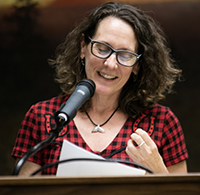 This one-day workshop outlines how one might offer students low-stakes practice in
concentration, in forging the link between perceiving and articulation, and in lifting
one another up in community through detailed expression and critique.
This one-day workshop outlines how one might offer students low-stakes practice in
concentration, in forging the link between perceiving and articulation, and in lifting
one another up in community through detailed expression and critique.
This workshop gives an explanation of the pedagogy behind the praxis, and discussion of ways it might be useful to participants. We'll then practice in a Canvas shell created for this workshop. The Canvas shell replicates the student experience. Some examples of suggestions for students are: "I suggest that in any presentation you take notes. If you're someone who writes quickly, you might find your three sentences of positive and detailed feedback, happens by the end of class. If you're someone who takes more time and thought to get sentences on the page, you might take more time to complete your feedback... Be very specific, for example 'I love the image you used' is stronger as 'The image of the flooded Desert was striking and scary'... Remember to be positive and feel free to express curiosity. We are here to lift each other up." Materials to support using this method will be available to participants from a Google file.
Workshop Dates and Times
Wednesday, September 9, 3:00pm - 4:15pm (Online via Zoom)
Monday, September 21, 12:00pm - 1:15pm (Online via Zoom)
Monday, October 5, 1:30pm - 2:45pm (Online via Zoom)
From Prompting to Understanding: Designing Explainable Human-AI Co-Writing Assignments
to Support Student Reasoning
With Mohammad Masum, Department of Applied Data Science
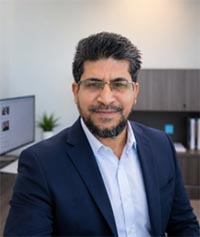 Generative AI can produce polished text, analyses, and code, but polished output alone
does not demonstrate understanding. This one-day workshop presents a practical writing-to-learn
framework for designing human-AI co-writing assignments that make student reasoning
visible. Rather than treating AI simply as a tool to permit or prohibit, the framework
embeds explanation, critique, revision, and reflection into the assignment itself,
requiring students to justify decisions, identify limitations in AI-generated work,
and demonstrate ownership of the final response.
Generative AI can produce polished text, analyses, and code, but polished output alone
does not demonstrate understanding. This one-day workshop presents a practical writing-to-learn
framework for designing human-AI co-writing assignments that make student reasoning
visible. Rather than treating AI simply as a tool to permit or prohibit, the framework
embeds explanation, critique, revision, and reflection into the assignment itself,
requiring students to justify decisions, identify limitations in AI-generated work,
and demonstrate ownership of the final response.
Through guided examples and a focused redesign activity, participants will adapt an existing assignment for an AI-supported learning environment. The session will introduce concise assignment templates and assessment criteria centered on clarity, reasoning, revision, and responsible AI use. Examples will draw from coding, data analysis, and other analytical tasks, while the framework can be adapted to writing-intensive courses across disciplines. Participants will leave with a revised assignment and classroom-ready materials.
Workshop Dates and Times
Workshop will be offered in Spring 2027.
Writing for Impact: Guiding Students Toward Publication and Presentation (Signups
are closed. Workshop is full.)
With Ulia Gosart, School of Information
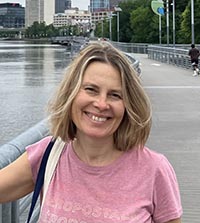 How can faculty help students transform their research into publications and conference
presentations? This mulit-week, interactive workshop explores strategies for mentoring
students through the publishing process while preparing them to share their work with
broader academic audiences. Participants will examine student-friendly journals across
disciplines, discuss authorship norms and best practices for faculty–student collaboration,
and identify funding opportunities that support conference participation. Through
collaborative activities and discipline-based discussions, attendees will leave with
practical resources and strategies to foster students' academic, professional, and
personal growth through scholarly writing and presentation.
How can faculty help students transform their research into publications and conference
presentations? This mulit-week, interactive workshop explores strategies for mentoring
students through the publishing process while preparing them to share their work with
broader academic audiences. Participants will examine student-friendly journals across
disciplines, discuss authorship norms and best practices for faculty–student collaboration,
and identify funding opportunities that support conference participation. Through
collaborative activities and discipline-based discussions, attendees will leave with
practical resources and strategies to foster students' academic, professional, and
personal growth through scholarly writing and presentation.
Workshop participants will earn a $500 stipend.
Workshop Dates and Times
This workshop will meet one day a week for four consective weeks, beginning the week
of October 5 and ending the week of October 26. This workshop will meet online via
Zoom. (Signups are closed. Workshop is full.)
Vote For Days and Times To Meet Here
Implementing Labor-Based Grading Contracts in Writing-Intensive Courses (Signups are closed. Workshop is full.)
With Mark Dowdy, Department of English
 Traditional assessment practices can lead students to focus more on grades than on
writing, feedback, and revision. As Asao B. Inoue argues, “The presence of grades
in a course is detrimental to our learning because they keep us from paying attention
to our labor and learning through failure and risk-taking.” Labor-based grading offers
an alternative by basing grades on the labor students undertake—drafting, peer review,
homework, reading assignments, participation, and revision—while still providing qualitative
feedback throughout the writing process.
Traditional assessment practices can lead students to focus more on grades than on
writing, feedback, and revision. As Asao B. Inoue argues, “The presence of grades
in a course is detrimental to our learning because they keep us from paying attention
to our labor and learning through failure and risk-taking.” Labor-based grading offers
an alternative by basing grades on the labor students undertake—drafting, peer review,
homework, reading assignments, participation, and revision—while still providing qualitative
feedback throughout the writing process.
This multi-week, four-session workshop series will explore the principles and implementation of labor-based grading. Session one examines its theoretical foundations, including equity, motivation, and alternatives to traditional grading. Session two guides participants in designing their own grading contracts, including methods for tracking and assessing student labor. Session three addresses responding to student writing, exploring how editorial and rhetorical feedback can guide revision without determining grades. The final session focuses on implementation and troubleshooting, including student resistance, instructor workload, adapting Canvas to a non-weighted system, and institutional constraints. Participants will leave with a grading contract and supporting materials ready to adapt to first-year or writing-intensive courses across disciplines.
Workshop participants will earn a $500 stipend.
Workshop Dates and Times
This workshop will meet one day a week for four consective weeks, beginning the week
of October 5 and ending the week of October 26. This workshop will meet in person on campus. (Signups are closed. Workshop is full.)