The Khatso Project
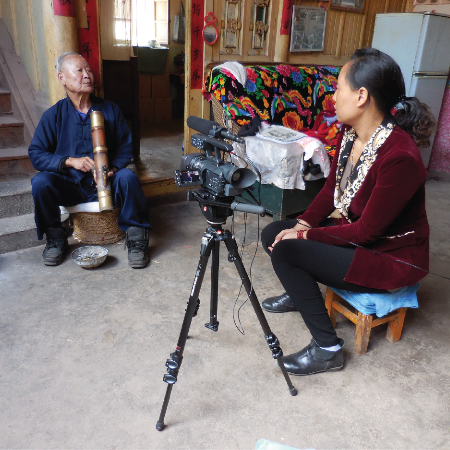
The Khatso Documentation Project began with research for my doctoral dissertation. I spent a year doing fieldwork in Xingmeng, from April 2012 to April 2013, with a follow-up visit in October 2014 and continued collaboration online. With my native speaker assistant, Kʰuɛi⁴⁴ Li²⁴ 奎丽, we recorded more than 50 hours of Khatso in both audio and video formats. These recordings include both elicited data and natural discourse. The elicited data comprise phonetic and phonological material, vocabulary and short phrases from more than 25 speakers. A number of natural discourse genres were captured, featuring more than 30 speakers, ranging from procedural instructions and personal anecdotes to spontaneous conversation and traditional narratives.
These data serve as the foundation of my academic work, which include a grammar, several articles and many conference talks (listed elsewhere on this site). Transcription, translation and analysis of these recordings continue, so that this endangered language may be preserved into the future for the speaker community and linguists alike.
I dedicate these pages to the Khatso community with gratitude, appreciation and friendship. My thanks also goes to the National Science Foundation (BCS-1226804), ACLS/Mellon, the Endangered Language Fund, and SJSU’s Khan Endowed Professional Development Fund for underwriting this project.
Dr. Chris Donlay
段克礼